Counterfeit goods are a serious problem for companies across almost every sector. According to Barker Brettel, counterfeit goods represent 2.5% of global trade and 6% of imports into the EU, with luxury, apparel, and pharmaceuticals being particularly affected. This has created major trust issues for consumers and costly risks for brands.
At the same time, customers increasingly demand transparency about the products they buy (including sustainability, ethical sourcing, and authenticity), rather than relying solely on marketing claims.
One of the most promising solutions addressing both challenges is the Digital Product Passport (DPP). Luxury brands such as Prada, Louis Vuitton, and Cartier are already adopting DPP-enabled systems to support authenticity, personalization, and compliance efforts. Now, companies in the UAE are beginning to explore this technology as part of their sustainability, traceability, and export strategies.
1. What is a Digital Product Passport (DPP)?
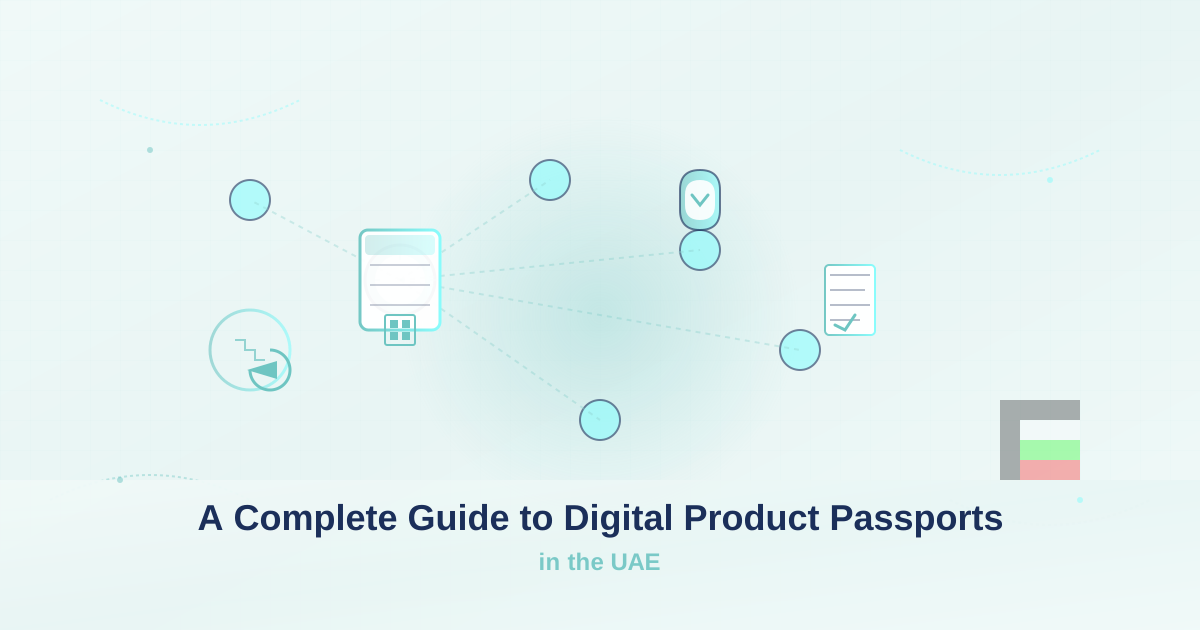
A Digital Product Passport is a digital identity linked to a physical item, allowing verified product data to be shared across its entire lifecycle, from sourcing to recycling. Protokol defines DPPs as "a mechanism for sharing product data throughout the product's lifecycle", accessible via QR, RFID, or NFC tags.
DPPs can contain:
- Product ID and serialization
- Materials and raw component data
- Manufacturing details
- Supply chain journey
- Sustainability and carbon data
- Recyclability and end-of-life instructions
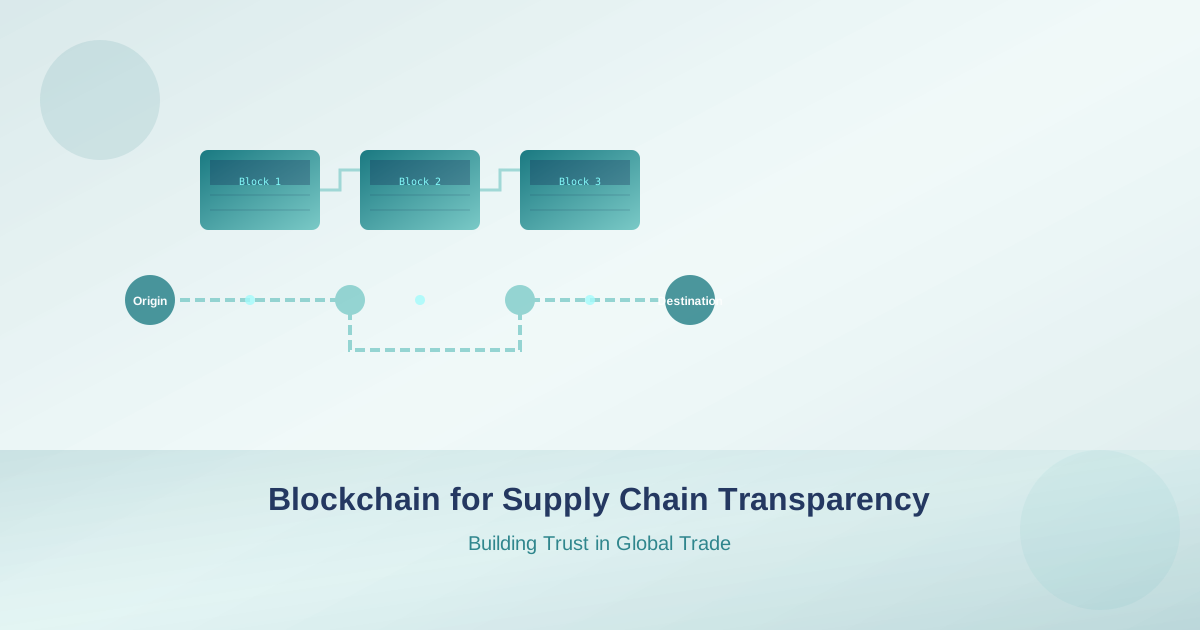
This enables a verified and trusted product "record of truth" throughout the supply chain, especially when combined with blockchain technology, IoT sensors, and decentralized validation systems.
2. Why are DPPs being adopted globally?
a) Anti-Counterfeit & Product Authenticity
Counterfeiting is a multi-billion-dollar global problem, especially for luxury goods, where, according to Forbes, counterfeit goods have contributed to roughly $4.5 trillion in annual losses.
Blockchain-backed DPPs enable:
- Unique identifiers (e.g., NFTs)
- Immutable ownership records
- Authentication before purchase
- Reduced reliance on human authenticators
Furthermore, blockchain creates a tamper-resistant ledger where multiple trusted nodes validate supply chain events, enabling fast authentication and making fraudulent items easy to detect.
b) Regulatory Compliance (ESPR & EU Policies)
The EU's Ecodesign for Sustainable Products Regulation (ESPR) will require DPPs for specific product groups (textiles first, then other sectors) as part of a European circular economy strategy. The ESPR entered into force in July 2024, with delegated acts to follow starting in 2025, and mandatory DPPs in some industries by 2030. The ESPR makes transparency and lifecycle traceability a requirement for companies selling in Europe — not just EU-based companies.
This means UAE exporters will need to comply if their product category falls under ESPR.
c) Customer Trust & Experience
Younger consumers increasingly care about product authenticity and sustainability. Research shows that 83% of millennials care about luxury authenticity, pushing brands to invest heavily in anti-counterfeiting measures. As a result, DPP-like authenticity features have improved:
- youth spending behaviour,
- brand trust, and
- long-term loyalty
This makes DPPs not just compliance tools, but customer experience infrastructure.
d) Sustainability & Circularity
DPPs support circular product flows (reuse, repair, resale, recycle) by making information available to recyclers, refurbishers, technicians, and second-hand buyers:
- provenance data
- materials breakdown
- repair instructions
- carbon footprint
- recyclability info
This aligns with the EU's Circular Economy Action Plan (CEAP) and ESPR strategies targeting textiles, electronics, and furniture for circular upgrades.
3. Why should UAE companies care?
a) ESPR applies to non-EU exporters
If a UAE manufacturer exports to the EU, ESPR may apply to their product category once delegated acts are released.
b) The UAE is moving towards sustainable supply chain leadership
The UAE has already begun implementing DPPs in sectors like steel, becoming one of the first countries to operationalize DPPs at a national level. The UAE is expected to expand DPP regulations across other sectors in the coming years, based on their commitment to sustainable development.
c) Counterfeiting affects UAE-relevant industries
Luxury, electronics, beauty, and pharmaceuticals (all major UAE retail sectors) face high risk from counterfeits. 52% of consumers lose trust in a brand after purchasing a fake good online, where 10% of all branded goods that are sold globally may be counterfeit products.
d) Customers demand transparency
Stakeholders want to know where products originated, how they were produced, how sustainable they are, and whether they're authentic. DPPs provide this in a verifiable format.
e) DPPs extend customer relationships beyond the sale
Blockchain-anchored DPPs allow for secure and verifiable ownership transfer, digital storytelling, and post-purchase engagement, creating new loyalty systems and service revenue. This is already happening in luxury watch resale markets through DPP-based digital twins and certificates of ownership.
4. Why companies should act now (not in 2027)
Several consulting and implementation experts estimate that preparing for DPP/ESPR compliance can take 18–24 months, due to:
- data restructuring
- supplier coordination
- missing upstream data
- regulatory alignment
- IT system modernization
That's why numerous consulting firms have warned that brands should begin preparing now for ESPR deadlines rather than waiting for delegated acts to finalize.
5. Key Takeaways
Companies face an expensive trust problem (counterfeits, data fragmentation, opaque supply chains) and consumers face an information problem (authenticity and sustainability uncertainty). DPPs solve both.
For UAE companies, DPPs are:
- a compliance requirement (if exporting to the EU),
- a competitive differentiator,
- a customer experience upgrade, and
- a sustainability enabler.
Prada, LV, Cartier, and others are not adopting DPPs just for compliance, they are doing it because authenticity, transparency, and lifecycle value are the future of commerce.
FAQs
Do UAE companies need to comply with ESPR?
Yes, if they export products into the EU and fall under a regulated category.
What products will require Digital Product Passports?
The EU will phase categories over time, starting with textiles, batteries, electronics, furniture, and construction materials.
Are Digital Product Passports only for luxury goods?
No. They are common in luxury today but will expand into mass market and industrial goods due to regulation.
How long does DPP implementation take?
Typically 18–24 months depending on data maturity and supplier readiness.
Does the UAE have its own DPP requirements?
The UAE introduced DPPs for Steel and is exploring additional categories as part of national sustainability strategies (UAE Government Announcements).
Ready to explore DPP solutions in the UAE?
We help companies understand, plan, and implement Digital Product Passport solutions that support:
- ESPR compliance
- Anti-counterfeit protection
- Customer experience
- Supply chain transparency
- Circular economy initiatives